PLANTS EAT SALAMANDERS
  • Home
  • Some data
  • Press

Learn from the bog

We recently discovered a new item on the menu for the carnivorous pitcher plant (Sarracenia purpurea). While capturing vertebrates was previously thought to be “accidental”, juvenile spotted salamanders (Ambystoma maculatum) are falling victim to the plant’s watery trap by the dozens and may be an important nutrient pulse for this population of pitcher plants in Algonquin Park

​We are working to better understand: How salamanders are so attracted to these cup-shaped leaves? How important a source of salamander mortality are these meat-eating plants? How much nutrition to the plants gain from their salamander meals? These are the questions we need to answer in order to unravel this surprising source of salamander mortality and plant nutrition.

Exploring the relationship between carnivorous plants and the animals they eat. 

Much of Canada’s north is nutrient poor bog and peatland.  Much of this area is characterized by carnivorous plants.  Plant carnivory is an incredible adaptation that has arisen independently nine times – often as an apparent response to nutrient poor conditions – however it is unclear exactly how much nutrient the plant derives from its animal prey.  In Canada, perhaps the most iconic carnivorous plants are the pitcher plants (Sarracenia purpurea L.).  These botanical pitfall traps are widely distributed across Canada’s boreal and augment their nutrient poor diet by feeding on array of invertebrate prey.
 
Recently, we reported (Moldowan et al 2019) the discovery that pitcher plants are capturing and (apparently) consuming juvenile spotted salamanders (Ambystoma maculatum Shaw) in Algonquin Provincial Park.  Not only did this discovery mark the first documented case of this species of vertebrate falling prey to a carnivorous plant, but the frequency that we have now documented this apparent predation (nearly half of plants we examined contained at least one salamander) suggests that this phenomena is both a) an important source of nutrients for the plant as well as b) an important and unappreciated source of mortality for the salamander.  

​Collaborators
​
​Amanda Semenuk - IB University of Guelph
Neil Rooney - SES University of Guelph
Christine Caruso - IB University of Guelph
Ze'ev Gedalof - Geography University of Guelph
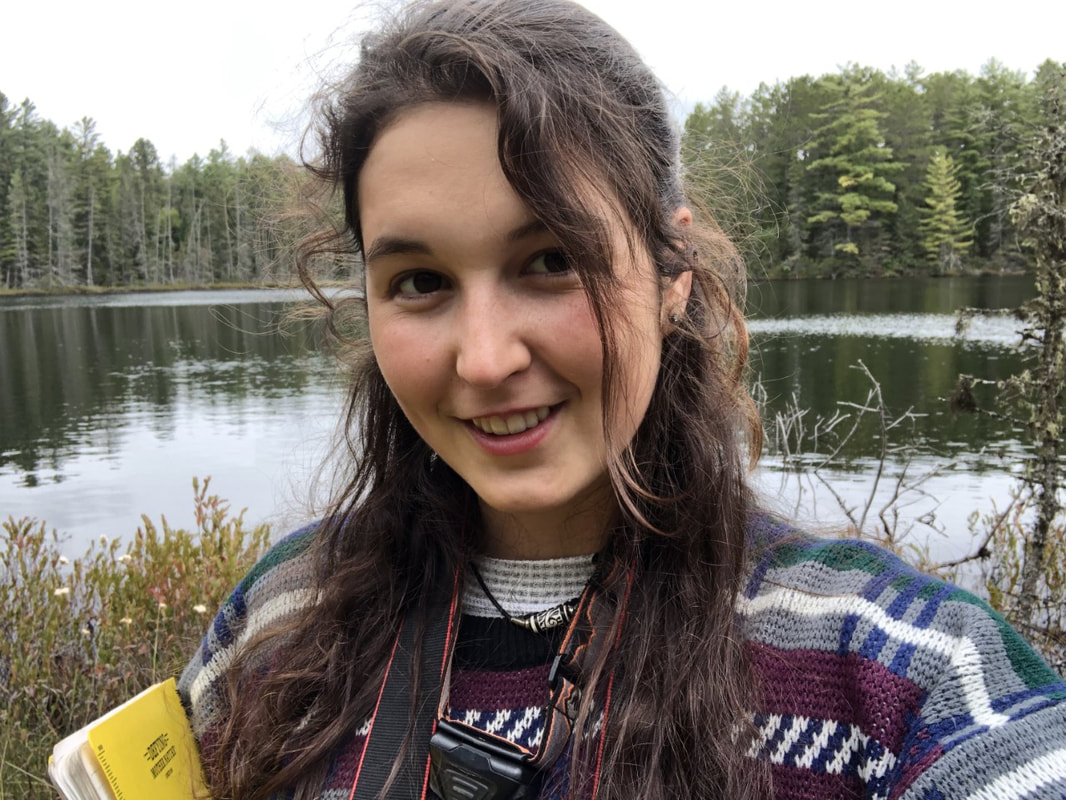
This is Amanda Semenuk -  the UofG undergraduate who has been working on the salamander project at the Wildlife Research Station. 
Picture
Collabo​rators

Patrick Moldowan - University of Toronto
Njal Rollinson - University of Toronto
Aaron Fisk - University of Windsor


Powered by Create your own unique website with customizable templates.
  • Home
  • Some data
  • Press